In this article · 10 sections
- What is USDT, and which network do suppliers use?
- How a USDT payment to a Chinese supplier works, step by step
- Who turns the USDT into yuan: U merchants and acceptance desks
- Why do Chinese suppliers ask for USDT instead of a wire?
- Is it legal for a Chinese supplier to accept USDT?
- A worked example: a USD 25,000 order paid in USDT
- USDT vs bank wire: what changes for the buyer
- What to ask the supplier before you agree
- Frequently asked questions
- Sources
Yes, technically you can pay a Chinese supplier in USDT: you send the stablecoin to a wallet address they give you, and the supplier, or a dealer working for them, sells it for Chinese yuan on a peer-to-peer market. But the step that turns USDT into yuan is banned inside mainland China, no bank checks who controls the receiving address, and a confirmed transfer cannot be pulled back. You save time and some fees, and you give up most of the protection a bank wire carries.
This page walks through the mechanics, the reasons suppliers give, what the supplier actually ends up with in yuan, and the questions worth asking before you agree. The risks to the buyer and the warning signs have their own pages.
What is USDT, and which network do suppliers use?
USDT, also called Tether, is a token issued by a private company, Tether, that aims to stay worth one US dollar. It is not a bank deposit: there is no deposit insurance, no chargeback and no bank in the middle. It exists on several public blockchains. The two you will most often be asked about are Tron, where the token standard is called TRC-20, and Ethereum, where it is called ERC-20. The same USDT on different networks is not interchangeable at the address level, so a supplier who says "send USDT" has not finished the instruction until they name the network.
Two features matter for a buyer. A transfer settles in minutes, at night, at weekends and on public holidays. And Tether itself can freeze tokens held at a given address: in January 2026 it froze about USD 182 million of USDT across five Tron addresses after a law-enforcement request, and its terms say it may freeze addresses when ordered to or voluntarily when that "appears reasonable and necessary" (The Block, January 12, 2026). That power serves Tether's compliance, not your disputes with a supplier.
How a USDT payment to a Chinese supplier works, step by step
A typical flow, from the request to the goods leaving the factory:
- The supplier sends a wallet address. Usually on WeChat (China's dominant messaging app, which most suppliers use for daily business and which also has a payment function, WeChat Pay) or by email. The message should name the network, for example "USDT TRC-20".
- You confirm the address through a second channel. A voice or video call with a contact you already know, reading the address character by character. Email and WeChat accounts get taken over, and a changed address is the oldest trick in supplier fraud.
- You acquire USDT in your own country through whatever regulated route is open to you, paying roughly the dollar price plus fees and a spread.
- You send a small test amount and wait for the supplier to confirm, in writing, that it arrived at the address they control.
- You send the balance on the agreed network, then send the supplier the transaction hash (the transfer's ID on the blockchain) so both sides can see it on a public block explorer.
- The supplier converts USDT to yuan. Few factories hold USDT for long; wages, materials, rent and taxes are paid in yuan. The supplier, a staff member or a dealer sells the USDT on a P2P (peer-to-peer) market, where individuals post ads to buy and sell USDT for yuan. The yuan arrives by bank transfer, Alipay (Ant Group's payment app, used by most people in China) or WeChat Pay.
- The goods ship. Nothing in the blockchain record ties your transfer to a contract, an invoice, a purchase order or a customs entry. That link exists only in the paperwork the two of you keep.
Who turns the USDT into yuan: U merchants and acceptance desks
Step 6 is where most of the cost and risk sits. Chinese traders call full-time USDT dealers U商 ("U merchants"): people or small firms that buy and sell USDT against yuan all day, mostly through the P2P sections of large exchanges. Bigger operations that convert crypto into yuan in bulk for a fee are called 承兑 (chengdui, roughly "acceptance" desks). Some suppliers never touch crypto: they hand you a dealer's address, and the dealer pays yuan into the supplier's account.
On the P2P boards, the advertiser who buys your supplier's USDT pays yuan into the supplier's bank card or Alipay account from their own account. If that money traces back to a fraud victim, Chinese police can freeze the receiving account. Traders call this 冻卡 (dongka, a frozen bank card), and it is common enough that exchanges now market protection against it, as the screenshot below shows.
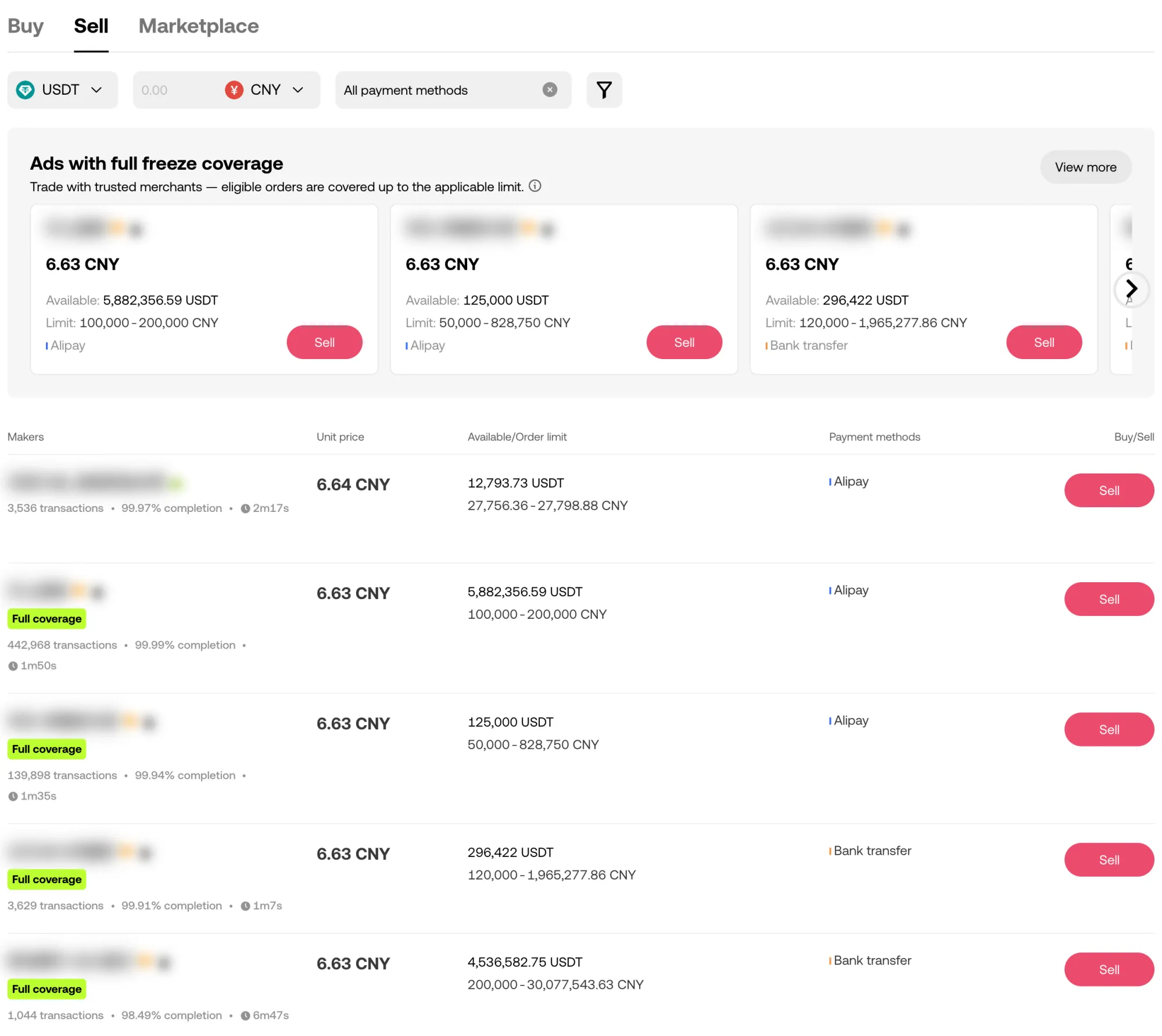
Notice that every ad has a minimum and a maximum. A supplier converting CNY 165,000 cannot use an ad capped at CNY 27,800, so the price they get depends on the size of the conversion. The rate article explains that in detail, and the OKX CNY P2P page on this site shows today's prices by order size.
Why do Chinese suppliers ask for USDT instead of a wire?
Knowing the motive helps you judge the request. These are the common ones.
Speed and certainty of receipt
A wire into China can take a day or more and may be held while the receiving bank checks the trade documents. USDT arrives in minutes. For a small factory with payroll due on Friday, that matters.
Avoiding China's foreign-exchange paperwork
China runs capital controls. Under the State Council's foreign-exchange regulations, current-account payments must have a "real and lawful transaction basis", and banks that convert foreign currency must review whether the trade documents are genuine and match the money (Regulations on Foreign Exchange Administration, Article 12). The regulator is SAFE, the State Administration of Foreign Exchange.
Individuals face a separate limit. Each person may convert foreign currency into yuan, and buy foreign currency, up to an annual "facilitation quota" of USD 50,000 equivalent with just an ID card. Outside that quota, banks ask for documents showing what the money is for.
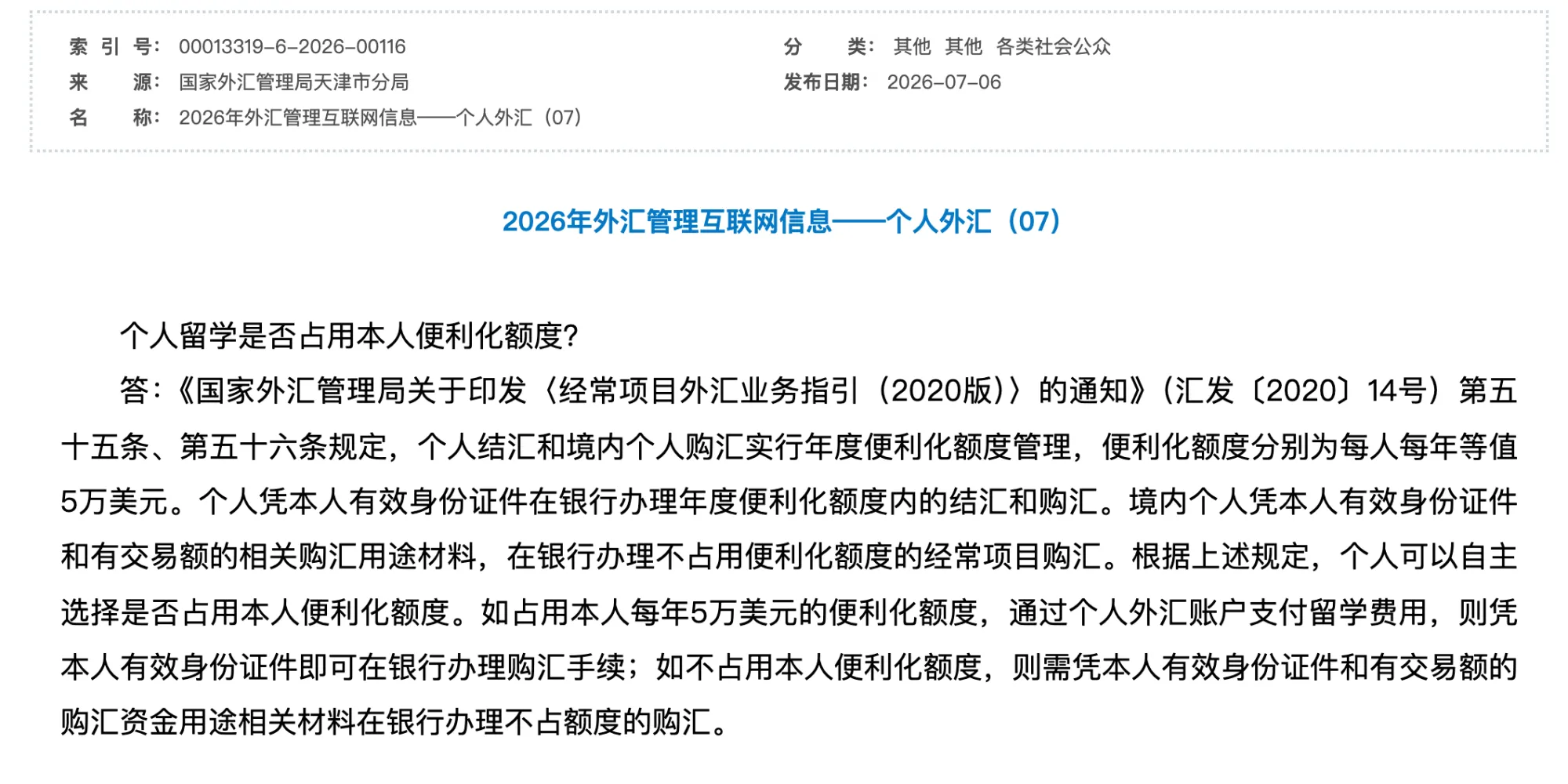
A supplier who invoices through a company account deals with bank document checks; one who wants to be paid through the owner's personal account runs into the USD 50,000 quota fast. USDT sidesteps both. That is exactly why it is risky for you: the paperwork is what makes a payment traceable and lawful on the Chinese side.
Being paid into a personal account
Some small trading companies take money through the boss's personal bank card. A wire to a personal account in China, for a commercial order, invites questions from the bank. USDT avoids those questions, which is a good reason for you to ask them.
A better effective rate, sometimes
The yuan has an onshore rate (CNY), managed around a central parity rate published each business morning by the China Foreign Exchange Trade System, and an offshore rate (CNH) that trades freely in Hong Kong and elsewhere. USDT has a third, informal price in yuan on the P2P market. When USDT trades at a premium to the official rate, a supplier who sells it gets more yuan per dollar than a bank would pay; at a discount, fewer. Our China USDT premium page tracks that gap.
Their own counterparties already use it
In some trade clusters, traders already hold USDT and pass it along. A supplier may simply be asking for what their own suppliers and customers use.
Is it legal for a Chinese supplier to accept USDT?
Not for the conversion step. Mainland China's current rule is the Notice on Further Preventing and Handling Risks Related to Virtual Currencies, Yinfa [2026] No. 42, issued on February 6, 2026 by the People's Bank of China (PBoC) and seven other agencies, SAFE among them. It names Tether (泰达币) alongside bitcoin and ether as virtual currencies without legal-tender status, and says that exchanging fiat currency for virtual currency inside China is illegal financial activity that is "strictly prohibited". It repealed the 2021 notice, Yinfa [2021] No. 237, which had already banned the same business (PBoC, 2026; PBoC, 2021).
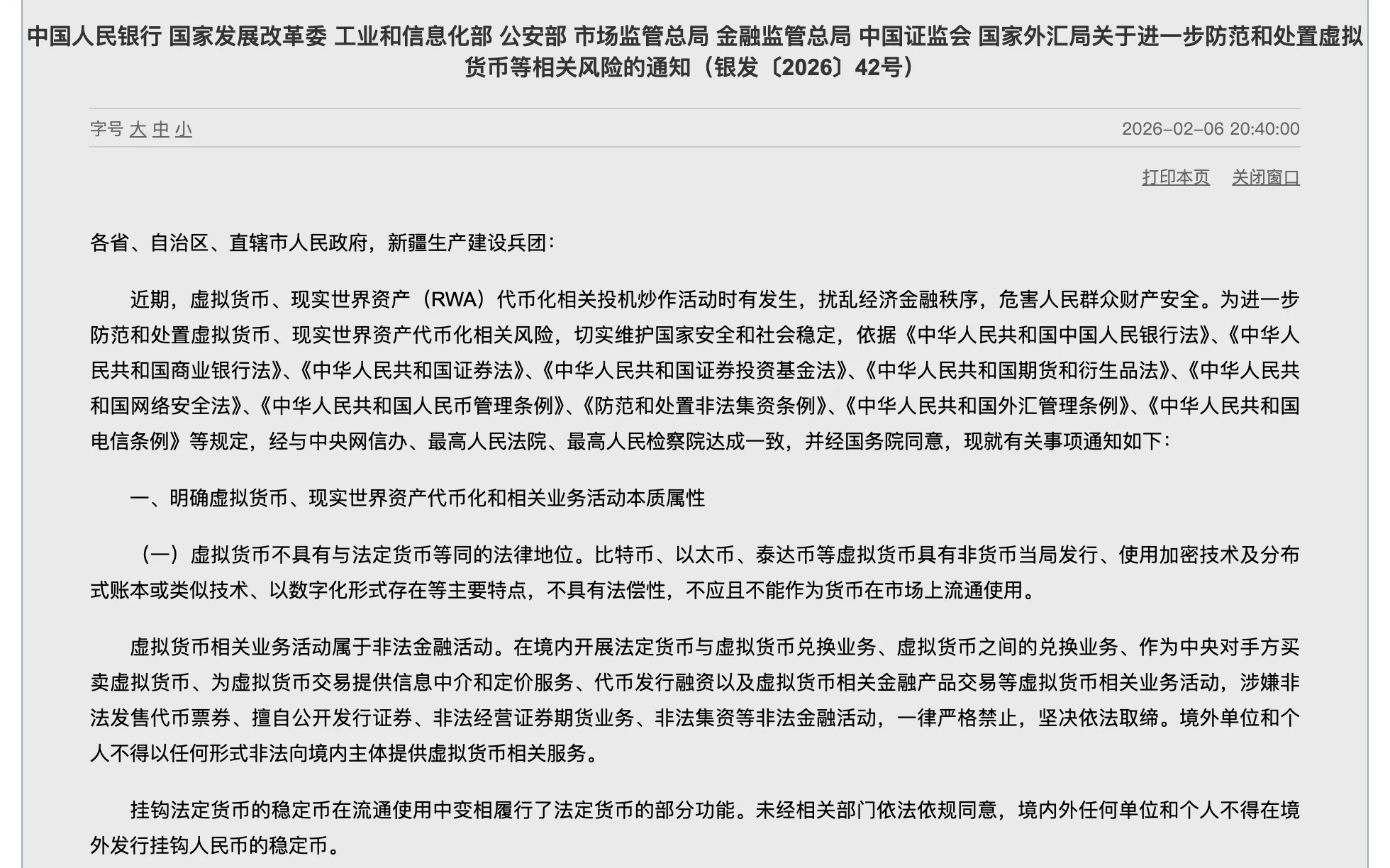
The same notice says that where investment in virtual currency violates "public order and good morals", the related civil acts are void and losses are borne by those involved. Chinese prosecutors also treat crypto as a channel for illegal currency trading: in December 2023, an official of the Supreme People's Procuratorate said that using virtual currency as a medium to convert between foreign currency and yuan is an important link in illegal foreign-exchange trading and should be punished (China Daily, December 27, 2023).
None of this is a rule about your own country. Whether you may buy and send USDT, and how you record it, depends on where you are. This is not legal advice; take local legal and tax advice before paying this way.
A worked example: a USD 25,000 order paid in USDT
The numbers below are hypothetical and chosen only to show the mechanics. Check the live USDT to CNY rate for real prices.
Say your invoice is USD 25,000. Your bank would credit the supplier's account and convert at 6.68 yuan per dollar. The best P2P ad that can take a single CNY 165,000 sale pays 6.63 yuan per USDT.
| Step | Bank wire | USDT |
|---|---|---|
| What you send | USD 25,000 plus your bank's fee (say USD 25) and USD 30 to cover the other banks' charges ("OUR") | 25,000 USDT, bought for about USD 25,040 including fees and spread |
| Your total outlay | USD 25,055 | About USD 25,040 |
| What reaches China | USD 25,000, because you paid all fees | 25,000 USDT in minutes |
| Conversion | 25,000 × 6.68 = CNY 167,000 | 25,000 × 6.63 = CNY 165,750 |
| Dealer margin | None | If a dealer handles it and keeps 0.5%: about CNY 829 less |
| Supplier ends with | About CNY 167,000 | About CNY 164,920 to 165,750 |
In this example the wire leaves the supplier about CNY 1,250 to 2,080 better off, even though the two cost you about the same to send. Flip the P2P price to a premium, say 6.72, and USDT would deliver more. That is why the answer to "which is cheaper" changes from day to day. The calculator on the supplier payments hub runs this comparison with your own figures, and the USDT to CNY converter prices a given amount.
USDT vs bank wire: what changes for the buyer
A bank wire leaves a record that banks, customs and tax authorities in both countries understand: a named payer, a named payee, an amount in dollars and usually an invoice reference. A USDT payment leaves a record between two addresses.
| Bank wire | USDT transfer | |
|---|---|---|
| Payee identity | Verified by the receiving bank | An address; anyone can control it |
| Reversal or recall | Possible in limited cases, such as fraud or error | None once confirmed |
| Link to your invoice | Payment reference, bank statements | Only what you document yourself |
| Status of the yuan conversion in China | Ordinary trade settlement | Prohibited under Yinfa [2026] No. 42 |
| Settlement time | Hours to days | Minutes |
| Supplier's frozen-account risk | Low | Real, because yuan comes from strangers |
The trade-offs are compared in full on the USDT vs wire vs agents page.
What to ask the supplier before you agree
Put these questions in writing and keep the answers:
- Why not a wire to the company account named on the contract and invoice?
- Who controls this address: your company, an individual, or a dealer? If a dealer, what is their name?
- Which network, and can we do a test transfer first?
- Will the commercial invoice show the full amount in dollars, and how will you record receipt?
- What yuan amount do you expect to receive, at what rate?
- If the goods are defective or not shipped, how will you refund, and in what currency?
- If your bank account is frozen after conversion, what happens to my order?
Vague or shifting answers are a reason to stop. The red flags page lists the patterns that should worry you most.
Frequently asked questions
Can I pay a Chinese supplier in USDT legally? That depends on your own country's rules on buying and sending crypto, which this page does not cover. On the Chinese side, the supplier's conversion of USDT into yuan is prohibited under Yinfa [2026] No. 42. Take local legal advice before agreeing.
Which USDT network do Chinese suppliers usually want? Most requests name Tron (TRC-20) or Ethereum (ERC-20). Always get the network in writing, confirm the address by voice, and send a small test first; a transfer sent to the wrong network may not be recoverable.
Will my supplier get more yuan if I pay in USDT? Only if the P2P sell price at their conversion size is higher than the rate their bank would pay. When USDT trades at a discount to the official rate, a wire usually delivers more. Compare on the China USDT premium page.
Can I get my USDT back if the goods never arrive? Not through the network. A confirmed transfer cannot be reversed by you, your bank or the blockchain. Your options are negotiation or a lawsuit, and a Chinese court may treat a crypto-settled deal as unprotected.
Why does the supplier want payment to a personal or third-party wallet? Usually to avoid bank checks or the USD 50,000 personal quota, or because a dealer is doing the conversion. Either way, paying someone other than the company on your invoice weakens your proof of payment.
Sources
- People's Bank of China et al., Yinfa [2026] No. 42, February 6, 2026: https://www.pbc.gov.cn/tiaofasi/144941/3581332/2026020619591971323/index.html
- People's Bank of China et al., Yinfa [2021] No. 237, issued September 15, 2021, published September 24, 2021 (repealed): https://www.pbc.gov.cn/tiaofasi/144941/3581332/4348658/index.html
- State Council, Regulations of the People's Republic of China on Foreign Exchange Administration (revised 2008), Article 12: https://www.gov.cn/zwgk/2008-08/06/content_1066085.htm
- SAFE Tianjin branch, personal foreign exchange Q&A, July 6, 2026: https://www.safe.gov.cn/tianjin/2026/0706/3085.html
- China Daily, SPP and SAFE officials on typical foreign exchange crime cases, December 27, 2023: https://cn.chinadaily.com.cn/a/202312/27/WS658b9022a310c2083e414bdd.html
- The Block, "Tether freezes $182 million in USDT tied to five Tron addresses," January 12, 2026: https://www.theblock.co/news/markets/2026-01-12-tether-freezes-182-million-usdt-385051
- OKX P2P, sell USDT for CNY (public ad list): https://www.okx.com/p2p-markets/cny/sell-usdt